

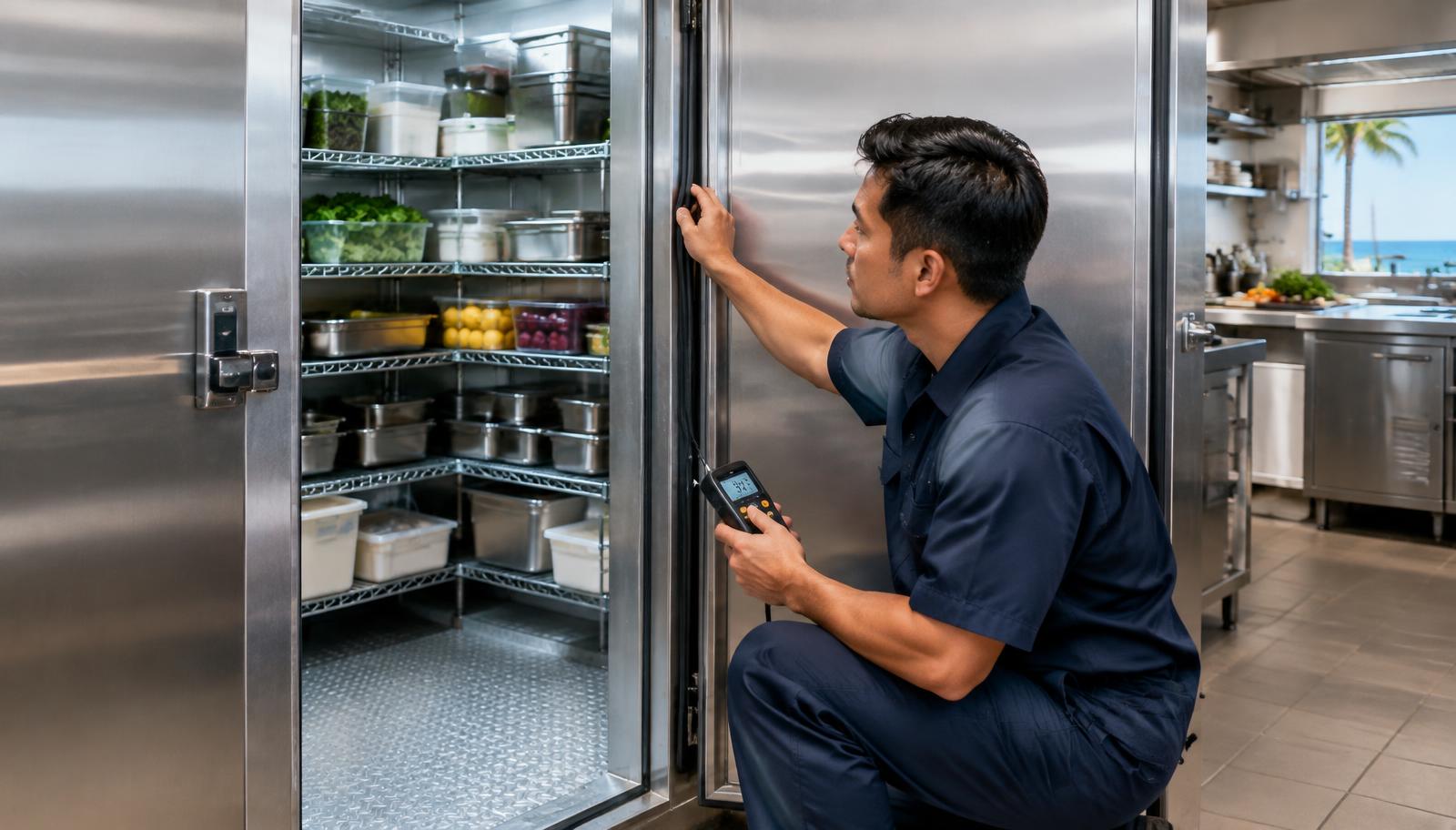
When a walk-in cooler runs warm, protect inventory first. Learn what Northern Colorado businesses should check and what details help speed up a repair request.
When a walk-in cooler starts running warm, the problem reaches beyond the equipment. A restaurant may need to adjust prep, a grocery store may need to move inventory, and a hotel kitchen may have to change its service plan. Even a small temperature change deserves attention when perishable products are involved.
If you manage a business in Longmont or elsewhere in our Northern Colorado service area, start with two priorities: protect the contents according to your food safety procedures and collect clear information for a repair technician. Avoid guessing at the failed part. A warm cooler may have a straightforward airflow problem, or it may need professional refrigeration repair.
Confirm the temperature and document the change
Check a reliable thermometer or your monitoring system and record the reading and time. Compare it with your usual logs and the requirements for the products you store. If the display and a separate thermometer disagree, include both readings in your service request.
Note whether the entire cooler is warm or only one area, whether the door has been left open, and whether the unit is running continuously or cycling as usual. Do not rely on how the air feels when you step inside. A written timeline gives your team a clearer picture and helps the technician troubleshoot.
Follow your established food safety plan for holding, moving, and evaluating inventory. If product safety is uncertain, follow your applicable guidance before serving or selling it. A repair can restore the equipment, but it cannot make improperly stored food safe again.
Check these visible issues without opening equipment panels
Door and gasket
Make sure boxes, carts, or a misaligned door are not preventing a complete seal. Look for visible gaps, torn gasket material, or condensation around the frame. Warm air entering through a bad seal can make the cooling system work harder and create moisture or frost.
Airflow inside the cooler
Products stacked against vents or too close to fans can block circulation. Rearrange inventory if your layout and handling procedures allow it. Look for a pattern: are items near one wall warmer than items near another? Share that detail with the service team.
Visible frost, water, or unusual sound
Heavy frost, pooling water, a new rattle, or a fan that appears to have stopped can help narrow the diagnosis. Photograph what you see if it is safe to do so. Do not chip ice away from coils, disconnect wiring, or handle refrigerant components. These actions can damage the unit and create hazards.
Why might a commercial cooler stop holding temperature?
Common possibilities include a door gasket that no longer seals, restricted airflow, fan trouble, control or thermostat issues, and problems elsewhere in the refrigeration system. Dirty components or a refrigerant leak may also affect performance. A technician needs to test the equipment before recommending a repair.
The same advice applies to reach-in coolers, commercial freezers, prep tables, and display cases, but their layouts and symptoms differ. Tell the provider exactly which unit is affected. If several pieces of equipment are running warm, mention that too; the pattern may matter.
What information speeds up a service request?
You do not need to diagnose the cooler yourself. Prepare the information a repair team can act on:
- Business name, address, on-site contact, and best access instructions.
- Equipment type, make, model, and a photo of the rating plate if available.
- Current temperature, normal operating range, and when the change began.
- Error messages, leaks, frost, new sounds, or a door that does not close correctly.
- Whether inventory has been moved and when the business needs access to the equipment.
This information helps the team understand the urgency and plan the visit. It also creates a useful record if the issue returns later.
What happens during commercial refrigeration repair?
A proper diagnosis looks beyond the thermostat setting. The technician may check the door seal, airflow, fans, controls, and cooling system to find why the unit cannot maintain its temperature. Once the cause is identified, ask what failed, what the recommended fix involves, and how you can monitor the equipment afterward.
After a repair, continue checking the temperature against your normal procedures before restocking or returning the unit to service. A machine that starts running again has not necessarily stabilized at the required conditions. Keep the temperature log and any repair notes with your equipment records.
If your kitchen has a backup unit, make sure staff know which products moved and when. Clear handoff notes help the next shift continue monitoring without assuming the problem has already been resolved.
Reduce the chance of another interruption
Assign someone to check and record temperatures consistently. Keep doors closed when possible, avoid blocking vents, and report worn gaskets or changing sounds before performance drops. Cleaning and maintenance should follow the manufacturer's instructions and your food safety procedures.
For businesses with several refrigeration units, scheduled maintenance can make it easier to spot wear, record recurring issues, and plan repairs around operations. It cannot eliminate every breakdown, but it gives your team more chances to act before a cooler stops holding temperature.
Commercial refrigeration repair across Northern Colorado
Capitol Mechanical Appliance services walk-ins, reach-ins, prep tables, and display cases for businesses in Longmont and surrounding Northern Colorado communities, including Boulder, Loveland, and Fort Collins. If a cooler is not holding temperature, request commercial refrigeration repair or call (720) 526-9170 with the unit details and current readings.
Need service in Northern Colorado?
Capitol Mechanical Appliance serves homes and businesses in Longmont and surrounding Northern Colorado communities. Schedule an appointment and we'll take it from here.
