

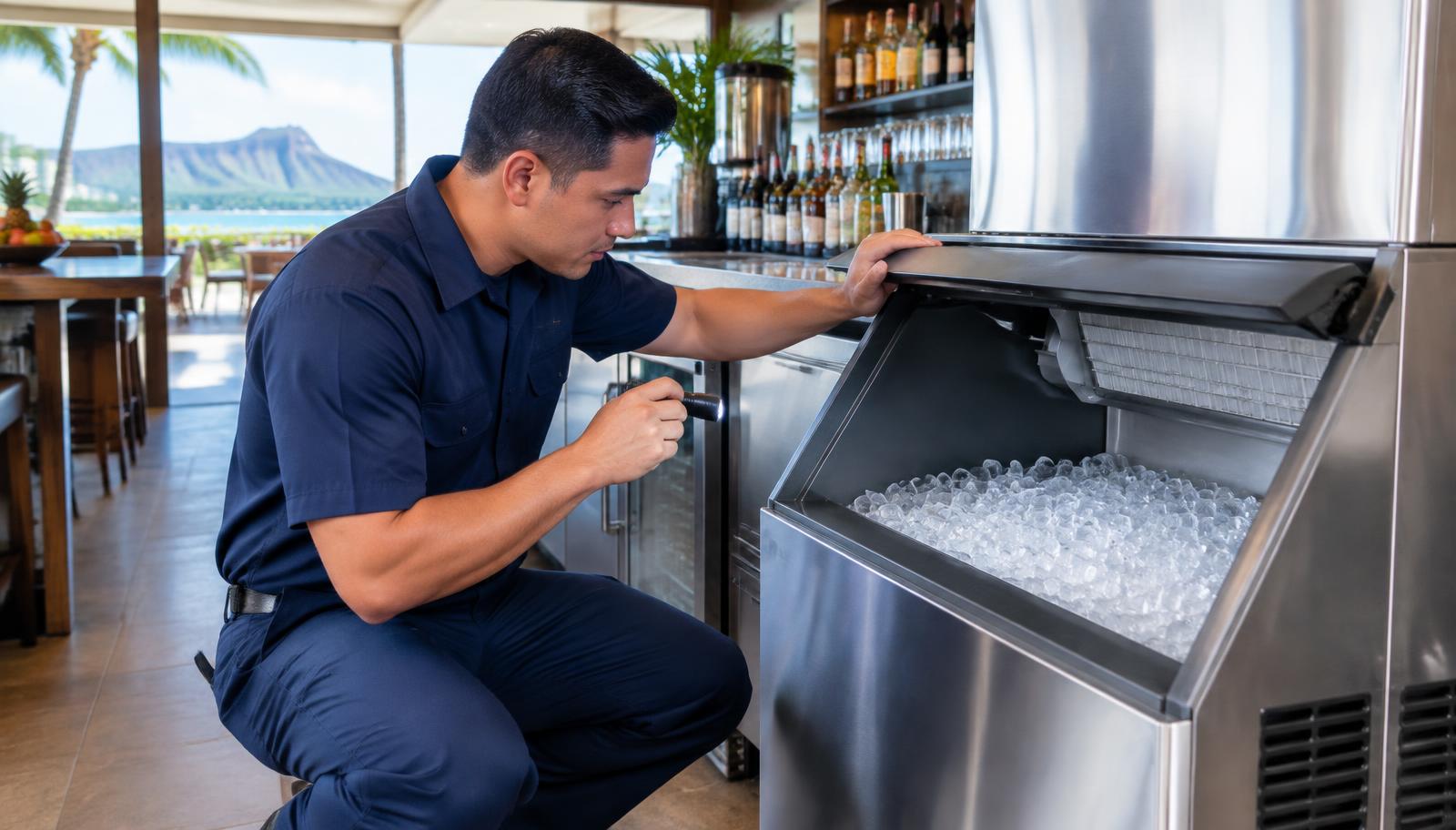
Low ice output can affect an entire shift. Learn the safe checks, cleaning signs, and repair details Honolulu businesses should know.
An ice machine rarely picks a convenient time to slow down. A restaurant may notice the bin is half full before lunch. A hotel or café may discover that production cannot keep up with a busy shift. When ice output drops, buying bags of ice may keep service moving for a while, but it does not explain why the machine is struggling.
For businesses in Honolulu and across Oahu, the best response is to identify the symptom, protect ice quality, and request service before production stops entirely. Low output can come from several causes, including airflow, water supply, buildup, or a failed component. A visual check helps; guessing at a repair does not.
What does 'not making enough ice' look like?
The bin may take longer to fill, cubes may be smaller or irregular, or the machine may stop and display an error. You might hear new sounds, see water where it should not be, or notice changes in the ice itself. Record when the decline began and whether it happens all day or mainly during your busiest hours.
Ice demand can also change. A machine that once met the needs of a small café may struggle after menu changes or higher customer volume. Compare current production with your usual demand before assuming the equipment has failed. If output suddenly dropped under the same operating conditions, arrange an inspection.
Check the basics your team can see safely
Airflow around the machine
Boxes and supplies can crowd an air-cooled machine. Keep the clearances specified by its manufacturer and check whether visible vents are blocked. A hot room or poorly ventilated equipment space can also affect performance. Do not remove panels or bypass any controls to investigate.
Water supply
Confirm that the accessible supply valve has not been accidentally closed and note any visible leak or unusual water flow. Do not take apart internal water or electrical components. Water supply and filtration issues may need a professional assessment.
Ice bin and visible buildup
Look for mineral scale, residue, or changes in the appearance or smell of the ice. Follow your facility's sanitation procedures if you suspect contamination. Do not serve ice that may be unsafe. Cleaning the storage bin alone may not address buildup inside the machine or a part that is malfunctioning.
Messages and cycle behavior
Take a photo of any error code and note whether the machine fills, freezes, releases ice, or stops at a particular point. Those details are useful when you book service. Avoid repeatedly restarting a unit that is leaking, tripping power, or showing a persistent fault.
Does the machine need cleaning or repair?
Cleaning and descaling are important when mineral buildup or residue affects the machine. Service may include cleaning components and following the manufacturer's approved procedures for the model. The right products and steps matter; using an unsuitable cleaner can damage equipment or leave a sanitation concern.
Repair is needed when a component or system is not working correctly. Low production can involve controls, airflow, water delivery, leaks, or mechanical parts. The symptoms overlap, so a technician may need to test the unit to distinguish a maintenance issue from a failed component. Sometimes both cleaning and a repair are needed.
If ice is discolored, smells unusual, or contains visible debris, stop serving it and follow your food safety procedures. An ice machine that makes plenty of ice still needs attention if the ice quality has changed.
Why a routine maintenance schedule matters
Commercial ice machines run through repeated cycles and often work hardest when a business is busiest. A maintenance plan can help your team keep cleaning, descaling, and inspection from being forgotten between service calls. The frequency should follow the manufacturer's directions, the equipment's use, and the conditions at your location.
Keep a simple log with cleaning dates, observed output, error codes, and any past repairs. It gives a technician a history to work from and helps you spot a gradual drop in production. If several machines serve the same property, label each one clearly so staff can report the correct unit.
Maintenance lowers the chance that a small issue goes unnoticed, but it does not guarantee that a machine will never break. Report recurring low output even if the machine briefly improves after a cleaning.
What to tell an ice machine repair technician
Share the equipment make and model, business address, when output dropped, and whether the machine has been cleaned recently. Describe the cube size, error messages, leaks, noises, or changes in ice quality. If the machine sits in a hot or crowded area, mention that too. Photos of the model label and error display can save time when arranging a visit.
Ask what the technician found and whether the next step is a repair, cleaning and descaling, or a combination. After service, monitor the output through normal business cycles instead of judging the result from one batch of ice.
If you use a temporary ice source while the machine is down, follow your usual handling and storage rules. Let staff know when the serviced machine has been cleared for normal use.
Ice machine repair across Honolulu and Oahu
Capitol Mechanical Appliance offers commercial ice maker repair and ice machine cleaning and descaling for businesses in Honolulu and across Oahu, including Waikiki, Kapolei, Waipahu, and Kailua. If your machine is slow, leaking, or producing poor-quality ice, call (808) 349-1098 to request service and share the symptoms.
Need service on Oahu?
Capitol Mechanical Appliance serves homes and businesses across Honolulu and the island. Schedule an appointment and we'll take it from here.
